
Walk into any modern underground parking garage and you’ll likely notice a curious phenomenon: despite the thousands of colors of epoxy flooring available, the dominant hues of the floors, walls, and guide lines tend to be cool blues or peaceful greens .
This is no coincidence, nor is it due to a lack of imagination on the part of the developers.
In fact, this choice is based on in-depth knowledge of color psychology and the instinctive human response to the environment. Underground garages are often enclosed, low-light, and sometimes even anxiety-inducing spaces. Therefore, designers need to use color to reduce driver stress, enhance a sense of security, and guide emotions towards calm. Today, we will deconstruct the logic behind the use of blue and green in underground spaces and examine how these colors subconsciously influence our mood and behavior.
Blue: The emotional “stabilizer” of underground space
Blue is one of the most common colors on Earth, representing both the sky and the ocean. In design, it’s considered the most widely used and least offensive color. In enclosed underground environments, blue is used as a powerful mood-setting tool.
Calm and Focus: The Cognitive Benefits of Blue Floors
Intellectual and Spiritual: Blue is inherently spiritual and intellectual . It evokes a sense of calm and contemplation, helping people to “calm their nerves.” In a driving environment, this calmness is crucial.
Reduce stress: Imagine entering your garage after a long day at work. A dark or medium blue epoxy floor can help lower your blood pressure and heart rate , much like looking at a calm lake. This subtle psychological cue helps you stay focused when searching for a parking space or leaving the car, reducing driving errors caused by fatigue.
Visual Depth and Sense of Space: Tips for Using Blue
Blue visually creates a sense of receding space, making it appear deeper. In narrow or crowded underground garages, using blue can help mitigate the oppressive feeling of walls and enhance the driver’s spatial experience.
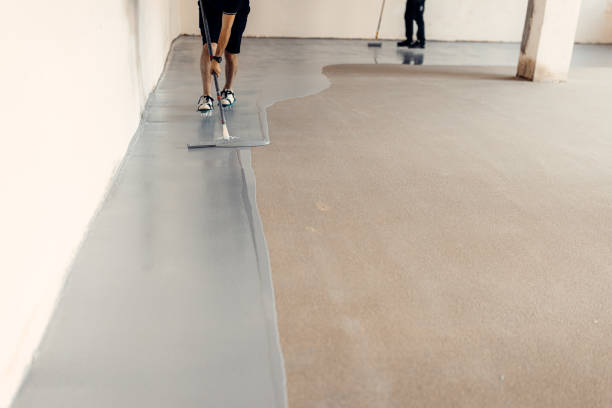
2. Green: Awakening a sense of security and vitality
Green is the representative color of nature, symbolizing life, freedom and harmony. Introducing green into the underground space, which lacks natural light and vitality, is a clever psychological compensation.
Psychological projection of security and relaxation
Peace and Security: Green symbolizes a sense of security and peace . In many cultures, green represents “passable” and “safe,” and this instinctive perception is crucial in a garage environment.
Relaxation and Refreshment: Underground garages are often perceived as dull. Using a green floor paint (such as aqua or moss green) can create a fresh, comfortable, and refreshing feel, breaking up the monotony and even evoking a sense of environmentalism and vitality . This is particularly important for high-end properties that incorporate fitness areas or recreational spaces within their garages.
The association between environmental protection and comfort
As society’s focus on sustainability grows, green has become increasingly associated with environmental protection. While epoxy coatings themselves aren’t “purely natural,” their green visual appeal can create a psychological impression among users that property management is health- and environmentally-conscious, indirectly enhancing the brand’s image.
3. Designer’s universal formula: Why are black, white and gray not suitable as main colors?
Although black, white and gray are classic colors for modern architecture, they are not ideal main colors in high-traffic underground garages.
Black: Too heavy and light-absorbing, it will exacerbate the claustrophobic and oppressive feeling of the underground space, while making dust and scratches more obvious.
White/light gray: Although it can brighten the space, its high reflectivity can easily cause visual fatigue to the driver, and it is not stain-resistant and difficult to maintain.
Conclusion: Blue and green offer a perfect balance – they are calm enough to cope with driving conditions, yet soft enough to provide psychological relaxation and a sense of security.
Summarize :
The next time you pull into your garage, take note of the floor beneath your feet: That calming blue or vibrant green isn’t just paint; it’s a designer’s carefully crafted “emotional buffer zone” using color psychology . This design philosophy aims to transform a space that could otherwise be intimidating into a calm, orderly transition zone.
This subtle attention to human emotions is the essence of modern architecture and design.
What other “invisible designs” have you discovered in your daily life that use color psychology to influence your behavior? Please share your findings in the comments section!
