
Investing in a high-performance garage floor coating is a big decision. Amidst all the chemical names—epoxy, polyurethane, and polyaspartic—consumers want to know: What will my floor look like in 10 years? And how much will it cost?
The price tag is just the beginning of the story. Only by factoring in initial cost, long-term maintenance, and durability can a true return on investment (ROI) be calculated. Let’s compare the real-world performance of three popular coatings over a ten-year period, based on experience in North American residential and commercial settings.
Overview of three mainstream coating technologies
Before diving into the comparison, it’s important to understand the basic positioning of these three coatings:
| Coating type | Core Advantages | Typical Applications | Initial cost (per square foot) |
| Epoxy | Lowest initial cost, high thickness, good chemical resistance. | Low-budget projects, DIY enthusiasts, infrequently used garages. | $3 – $7 |
| Polyurethane | Excellent wear resistance and flexibility, often used as a topcoat. | Industrial environments, high traffic areas, locations where ultraviolet (UV) resistance is required. | $5 – $10 |
| Polyaspartic | It cures very quickly (single-day completion), is UV stable, and offers excellent flexibility. | High-end residential garages, commercial settings, projects requiring ultra-fast turnaround. | $7 – $12 |
The real appearance after ten years: the contrast between gloss and flaws
Whether a coating maintains its “new” appearance depends primarily on its ability to resist two factors: ultraviolet (UV) radiation and “hot tire pickup . “
1. Epoxy: Challenges and Compromises
Appearance after 10 years: If your garage is exposed to sunlight (with the garage door often open), yellowing is the most common visual defect, also known as chalking or UV degradation. Furthermore, because epoxy resin is relatively rigid and cures slowly, peeling , cracking, and unsightly spots from “tire pull” are likely to appear within 10 years.
Maintenance requirements: The average lifespan of epoxy flooring is about 5-7 years. To restore its beauty and protective properties, a complete renovation and recoating is usually required within ten years , which involves a lot of preparation work and material costs.
Suitable for people: Homeowners with extremely limited budgets who are willing to accept that a major renovation will be needed after 5-7 years.
2. Polyurethane: A professional endurance racer
Appearance after 10 years: Polyurethane coatings offer superior resistance to abrasion and scratches, and their UV resistance far surpasses that of epoxies. They retain much of their gloss and color stability after 10 years, with minimal yellowing . Their flexibility also allows them to better adapt to slight movements in the concrete, reducing cracking.
Maintenance requirements: If used as a high-performance topcoat (typically over an epoxy primer), polyurethane may require only periodic deep cleaning for up to ten years. Unless severely impacted, extensive recoating is not necessary . Maintenance costs primarily focus on routine cleaning and possible spot repairs.
Applicable people: mid- to high-end owners who value durability and hope for a service life of more than ten years.
3. Polyaspartic: The modern high-performance king
Appearance after 10 Years: This coating is one of the most UV-stable on the market, exhibiting virtually no yellowing after 10 years . It offers exceptional flexibility, impact resistance, and abrasion resistance, effectively withstanding tire hot-pull, chemical spills, and extreme temperature fluctuations. Its appearance generally remains the same, with minimal defects.
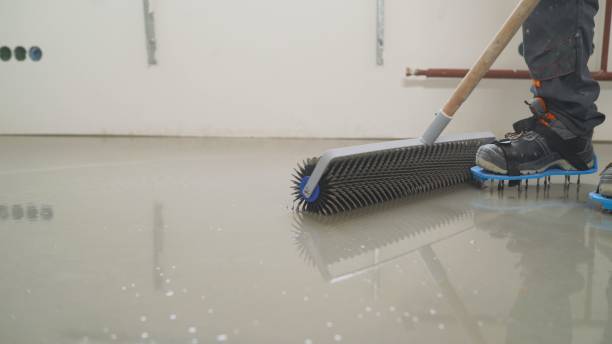
Maintenance Requirements: Due to its exceptional durability, polyaspartic esters typically require minimal cleaning and maintenance for ten years. When properly installed, they are typically designed to last 15-20 years. This results in minimal long-term maintenance costs.
Suitable for: Owners who pursue “one-time investment, long-term worry-free”, have extremely high requirements for the appearance of the garage, and hope to complete the project with the shortest downtime.
Ten-Year Total Cost Calculation: Long-Term Value Comparison
When we calculate the total cost of these three options over a 10-year period, we find that the option with the lowest initial cost may end up being more expensive.
Assuming a typical 400 square foot two-car garage, the initial cost and maintenance/repainting costs are as follows:
| Coating type | Initial installation cost ($) | Estimated number of recoatings within 10 years | Recoating cost ($) | 10-year total cost (estimated) |
| epoxy resin | $1,500 – $2,800 | 1 time (5th-7th year) | $1,000 – $2,500 | $2,500 – $5,300 |
| polyurethane | $2,000 – $4,000 | 0 times (local repair only) | N/A | $2,000 – $4,000 |
| Polyaspartic acid | $2,800 – $4,800 | 0 times (rarely needed) | N/A | $2,800 – $4,800 |
Long-term value conclusion:
Epoxy: Although it has the lowest initial cost, its total cost over 10 years may be the same as or even higher than more durable coatings because it will likely require an expensive and time-consuming complete refurbishment after 5-7 years .
Polyurethane and polyaspartic: These offer a higher initial investment in exchange for 10 years of near-zero maintenance costs . They offer better protection and a more stable appearance over the long term, making them a smarter financial choice.
How to make a wise “ten-year agreement”?
Your choice should be based on how much use you want your garage to receive and how aesthetically pleasing it is:
If you are a light user: If your garage is primarily for storage, or your vehicle is only parked for a short time, and you don’t mind the slight yellowing and flaking that may occur after 5-7 years, a high-quality epoxy system is a reasonable budget choice.
If you’re a heavy user or professional: If your garage is your workshop, where you frequently perform car repairs, work with chemicals, or have frequent vehicle traffic, then you should go straight for polyaspartic . Its flexibility, chemical resistance, and minimal maintenance requirements will provide you with the lowest long-term headaches.
Final reflection:
When it comes to garage coating projects, you’re paying for durability, not thickness. While epoxy may appear thicker when first applied, its chemical structure makes it less durable than polyaspartic.
If you can save yourself a painful recoat ten years from now, avoid two peeling repairs, and enjoy a like-new floor every day, is the higher initial investment well worth it?
