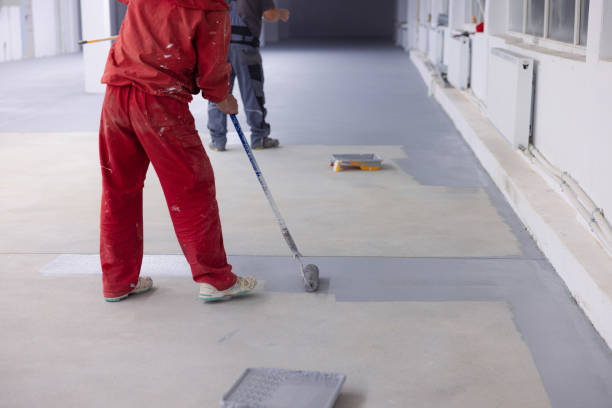
Epoxy coatings have long dominated garage floor upgrade options thanks to their smooth, high-gloss finish and excellent chemical resistance. But let’s face it: epoxy coatings require demanding surface preparation, have lengthy cure times, and, if they fail, are labor-intensive and time-consuming to repair.
If you’re looking for a solution that’s more flexible, easier to DIY, or can better hide existing floor imperfections, it’s time to think beyond just “coating.”
For homeowners who use their garage as a workshop, gym, or need a quick, removable floor, a non-coated option may be a wiser choice. We’ll focus on three key alternatives to epoxy coatings : interlocking tiles, roll-type floor mats, and high-quality concrete sealers, with an in-depth comparison of the first two.
Option 1: Interlocking Tiles – Modular Freedom
Interlocking floor tiles are a solution that has surged in popularity in recent years, providing a highly durable, customizable, and adhesive-free “floating” flooring system.
Key Materials and Advantages:
There are two main categories of interlocking floor tiles:
Polypropylene (PP) rigid plastic bricks:
Advantages: Extremely high load-bearing capacity (can withstand jacks and heavy vehicles), excellent stain and chemical resistance, strong ventilation (common open grille design allows for drainage and odor dissipation), customizable colors and patterns.
Disadvantages: Less comfortable to stand on, may feel hollow or make noise when stepped on.
Polyvinyl chloride (PVC) soft plastic bricks:
Advantages: higher comfort, shock absorption and noise reduction, better anti-slip performance and good waterproof performance.
Disadvantages: The load-bearing capacity is slightly lower than that of PP, and it is easy to leave indentations from heavy objects (such as jacks).
The core advantages of tiles:
Easy to install and repair: This is the biggest advantage. They snap together like puzzle pieces, requiring no adhesive, and can be installed by the average homeowner in a few hours. If a tile becomes damaged, it can simply be removed and replaced without destroying the entire floor.
Hides floor imperfections: Can be laid over old concrete with minor cracks, stains or moisture issues without the need for rigorous grinding or repair.
Design freedom: With unlimited color and pattern combinations, you can easily divide workspaces, parking areas, or fitness areas.
Option 2: Roll-Out Mats – Fast, Seamless, and Protective
Roll-up floor mats (usually heavy-duty PVC or rubber) offer the perfect option for those looking for the simplest and quickest solution.
The core advantages of floor mats (Mats):
Seamless Coverage and Waterproofing: The biggest advantage of roll-type mats is that they have minimal seams (usually only at the ends), creating a huge waterproof barrier that’s perfect for preventing water, oil, or chemicals from seeping into the concrete below.
The fastest installation: just roll it out and lay it flat. You don’t even have to move all the heavy stuff, just lay it out in sections.
Cushioning and Noise Reduction: Rubber or thick PVC material provides excellent shock absorption and anti-fatigue performance, suitable for use on workbenches or fitness areas.
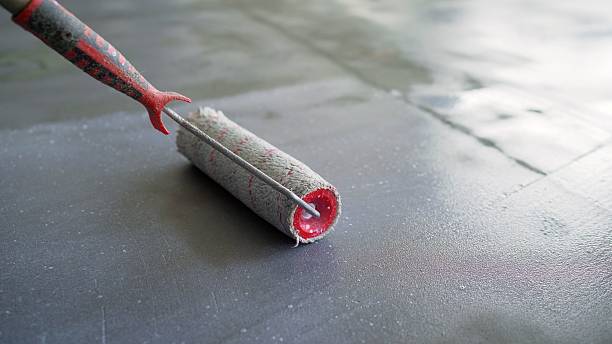
Tiles vs. Mats: A Quick Comparison
| characteristic | Interlocking floor tiles (PP/PVC) | Roll-Out Mat | Best choice scenario |
| Installation difficulty | Easy (fits together like a puzzle) | Very easy (roll out directly) | Seeking speed: mats |
| Mobility | High (easy to disassemble and move) | Medium (heavier overall, less prone to curling) | Need to move: floor tiles |
| Ground compatibility | Excellent (may cover minor damage) | Excellent (may cover minor damage) | Covering uneven surfaces: Both |
| Wear-resistant/weight-resistant | Excellent (especially PP hard bricks) | Excellent (Heavy Rubber/PVC) | Long-term heavy load: floor tiles |
| Waterproof/Oil Spill | PP open grille facilitates drainage; PVC bricks are highly airtight | Excellent (minimal seams, resulting in a watertight tray) | Extreme Spills: Mats |
| Customization | Very high (unlimited color and pattern combinations) | Lower (limited colors and textures) | Pursuing visual effects: floor tiles |
| Repair costs | Very low (only single brick replaced) | Higher (need to replace the entire mat or repair it) | Vulnerable areas: floor tiles |
Option 3: Concrete Sealers – Maintaining Natural Beauty
If you like the original look of your existing concrete but still want basic protection, a high-performance sealer is the best choice.
High-quality sealants are not paints:
Sealers (such as polyurethane sealants or high-performance lithium silicate penetrants) are different from epoxy coatings. They are penetrating or thin-coat protectants designed to:
Foundation antifouling: Improve the surface density of concrete to prevent the penetration of oil, water or chemicals.
Strengthened surface: Increases surface hardness, reduces dust generation and minor wear.
Maintains breathability: Does not completely seal the concrete, allowing moisture to escape, avoiding blistering issues that can occur with epoxy coatings.
Best for: Garages with limited budgets, good flooring, and a desire for a low-key, natural look. However, please note that it’s not nearly as protective or durable as tile or high-performance coating systems.
Conclusion: Choose Your Garage Philosophy
Choosing a garage floor comes down to choosing a “garage philosophy”:
If you are a car enthusiast who needs an indestructible, highly wear-resistant and perfectly seamless display surface: high-performance polyaspartic coating systems remain your gold standard.
If you’re a DIY enthusiast, a renter, or using your garage as a multi-purpose space and need flexibility and customization, interlocking tiles are the way to go.
If you’re looking for speed, maximum waterproof protection and cushioned comfort: Roll-Out Mats are your best choice.
Regardless of your choice, upgrading your garage floor is a worthwhile investment that not only improves the aesthetics of the space but also protects the long-term health of your foundation.
What’s most important to you in your garage flooring—durability, aesthetics, or speed of installation? Which “non-epoxy” solution does your garage need? Share your thoughts below!
