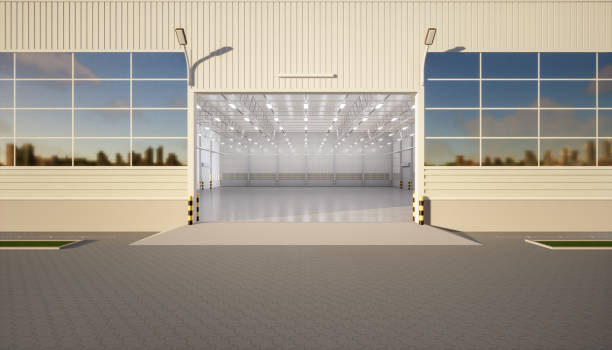
Your home garage floor might perform well as a weekend DIY project, holding up the weight of your SUV and a few tool boxes. But if you try to apply that same DIY epoxy kit to a commercial kitchen, a busy auto body shop, or a heavy-duty manufacturing plant, it will fail completely in just a few weeks.
industrial-grade flooring systems and residential systems goes beyond simply applying a few more coats. It involves a comprehensive upgrade, from the base material’s chemical resistance to mechanical strength , anti-slip safety standards , and construction techniques . Industrial flooring must be “tank-grade,” able to withstand the rigors of a home environment unimaginable.
This article will compare the differences between these two systems in detail and analyze the four core requirements for floor coatings in professional environments to help you understand why you must invest in professional industrial-grade solutions in heavy-load areas.
1. Comparison of the differences in demand between domestic and industrial flooring
The expectations for flooring in domestic and industrial environments are completely different from the beginning.
| feature | Home systems (home garages, basements) | Industrial/commercial systems (workshops, warehouses, kitchens) |
| Core Requirements | Beautiful, easy to clean, basic wear resistance | Extremely durable, chemical-resistant, safe, and compliant |
| Stress type | Light traffic, temperature changes, occasional oil dripping | Heavy machinery, forklifts, chemical spills, sustained high temperature/humidity, severe wear and tear |
| coating thickness | 8-15 mils (about 0.2-0.4 mm) | 30-100+ mils (approx. 0.7-2.5 mm), multi-layer system |
| Topcoat type | Polyurethane or polyaspartic acid (focus on UV resistance) | High-performance polyurea/epoxy, or phenolic/vinyl ester (focused on acid and alkali resistance) |
Thickness and strength: physical protection under heavy load environment
Industrial flooring is typically a multi-layer system, with a total thickness far exceeding that of thin residential coatings. This increased physical thickness is essential for resisting impact loads, fatigue wear , and indentation in areas subject to forklifts, pallet trucks, or heavy equipment . Residential systems would quickly crush or wear through under such pressure.
2. Four core requirements in industrial environments
Industrial-grade flooring systems must pass testing in four key areas to be considered qualified.
Chemical Resistance: More Than Just Motor Oil
Pain points: Auto repair shops come into contact with brake fluid and fuel; laboratories come into contact with strong acids and alkalis; and food processing plants come into contact with fatty acids. Household epoxies (typically amine-cured) can, at best, leave permanent stains when exposed to these substances, or even corrode and decompose the coating.
Material Selection: Industrial environments require specialized chemical-resistant epoxy resins , highly cross-linked, high-performance polyureas , and even **vinyl ester** coatings for the harshest environments. These materials form a dense molecular structure that effectively prevents corrosive substances from penetrating and damaging the underlying concrete.
Extremely wear and impact resistant
Pain points: Frequent forklift maneuvers (especially in narrow aisles), heavy tool drops, and hundreds of foot traffic events per day.
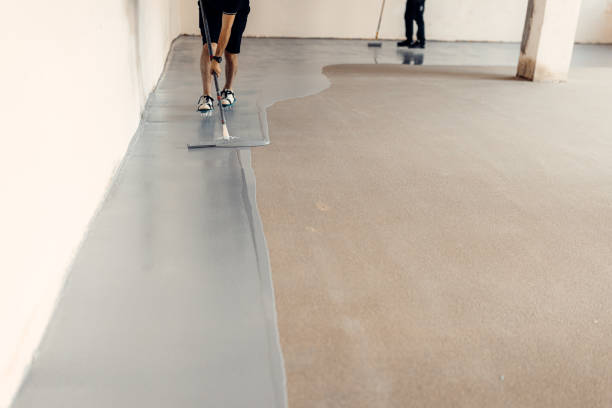
Solution: To achieve extreme wear resistance, industrial systems typically use a high-solids, 100% solid epoxy resin as the base, incorporating large amounts of quartz sand or extremely hard alumina as aggregate. Once cured, these aggregates and the resin form a granite-like composite surface, significantly enhancing the coating’s hardness and wear resistance .
Slip Resistance and Safety Certification: Legal and Ethical Responsibilities
Legal requirements: In commercial and industrial spaces, slip resistance is no longer a decorative option but a mandatory safety standard required by OSHA (Occupational Safety and Health Administration) and insurance companies . Slippery floors can lead to costly claims.
Solution: Industrial systems must have a customized anti-slip coefficient based on their operating environment (e.g., dry areas, frequently wet and slippery areas, oily areas). This is typically achieved by incorporating a high-density anti-slip aggregate into the coating to ensure the floor provides adequate grip under all operating conditions.
Fast curing and downtime management
Commercial Costs: Downtime during construction of a commercial project directly equates to monetary loss.
Solution: Industrial projects rarely rely on traditional epoxy resins, which require several days to cure. Instead, they rely heavily on fast-curing materials like polyaspartic or methyl methacrylate (MMA) , ensuring floors can be put into light-duty use within 24 hours, minimizing business disruption.
3. Professional construction and system design: transcending the barriers of DIY
Installing industrial flooring is a project that requires specialized chemical knowledge and experience in operating heavy machinery.
Customized system design: Industrial flooring requires a customized system design based on the specific use of each area . For example, chemical storage areas may require additional chemical barriers; washing or food processing areas may require slopes and drainage systems that meet hygienic requirements ; and assembly line areas may require anti-static (ESD) coatings to eliminate static electricity .
Professional tools and personnel: The thickness and material requirements of industrial-grade flooring require the use of larger concrete grinders , specialized high-pressure spray equipment , and a certified construction team with chemical and safety training .
In conclusion:
Industrial flooring systems differ fundamentally from residential systems—they are designed for vastly different challenges. Faced with heavy loads, corrosive chemicals, and high traffic, only customized, multi-layer systems , high-performance chemical formulations , and specialized application techniques can ensure long-term durability and safety.
If you’re choosing flooring for a commercial space or a high-intensity home workshop, don’t be tempted to save money with a DIY kit. Investing in an industrial-grade system will truly protect your assets, comply with safety regulations, and ensure your floor continues to function properly for decades to come.
Besides what we’ve mentioned, what other critical, non-negotiable flooring requirements do you think industrial environments place on you? Share your insights in the comments!
