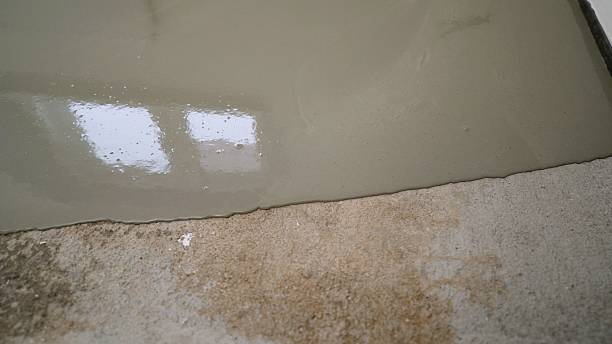
If you’re planning to upgrade your garage, whether turning it into a home gym, a woodworking shop, or simply a parking space, you’ll likely face a soul-searching question: Should you choose metallic hardener or epoxy coating for your garage floor?
Every day, I receive countless inquiries from homeowners worried about making the wrong decision, which could lead to costly rework in the future. Don’t worry, you’re not alone. Today, we’ll unpack the realities of these two most popular materials and use the data to help you make a wise choice you won’t regret for the next 20 years.
Spoiler alert: The conclusion is simple: if you need industrial-grade resistance and long-term durability, choose carborundum; if you’re looking for aesthetics and color, and don’t need high daily use, choose epoxy floor paint. Now, let’s delve deeper into the three core indicators to see why this “universal formula” works.
1. Core indicator 1: Who is the real “king of durability”?
Your garage floor bears the weight of not only your car, but also dropped tools, oil spills, and even your passionate DIY projects. We put emery and epoxy coatings in a brutal durability comparison.
Emery floor: Physical hardening, comparable to a fortress (H3)
The durability of corundum (usually referring to wear-resistant aggregate flooring) is simply a dimensionality reduction attack. Its working principle is to physically compact and solidify high-strength metal or non-metallic aggregates (such as quartz sand, corundum particles) with the concrete base .
Industrial-grade strength: Imagine it’s like laying a layer of indestructible armor on a concrete surface. Actual tests show that diamond abrasive flooring can easily withstand repeated crushing by forklifts weighing up to 5 tons. Its design lifespan often exceeds 20 years , truly demonstrating the promise of “invest once, benefit for a lifetime.”
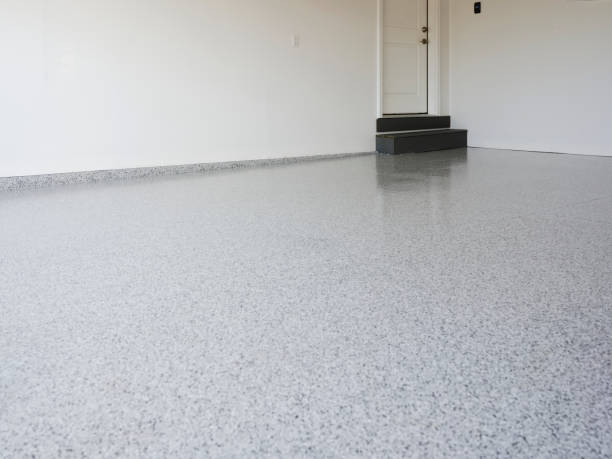
Epoxy coating: A “polymer skin” with both beauty and fragility (H3)
Epoxy floor paint is essentially a polymer coating . It has a first-class aesthetic effect, but it is relatively fragile when facing physical impact.
Susceptible to knife cuts: Epoxy coatings can be permanently scratched or even peeled off if they encounter sharp metal tools, the support points of a jack, or the drag of a toolbox.
A real-life example: I once met an auto repair shop owner who opted for an epoxy coating to achieve a glossy finish. However, hydraulic fluid leaks from the lift, coupled with repeated friction from tools, caused the floor to peel and flake within three months, ultimately forcing a complete rework.
Bottom Line: If you frequently use heavy equipment like jacks, welding machines, or use your garage as a high-intensity workshop, emery is the only answer.
2. Core indicator 2: long-term maintenance costs and ease of cleaning
The cost of flooring should not only be judged by the initial investment, but also by its “hidden expenses” in the next ten or twenty years.
Epoxy coating: a “lady” that needs pampering
Epoxy floor paint has a smooth surface and seems easy to clean, but it requires ongoing maintenance:
Lifespan and Renovation Cycle: Epoxy coatings typically require sanding and renovation every 2 to 3 years to restore their gloss and wear resistance.
Moisture problems: Especially in rainy or humid areas (such as coastal areas), epoxy coatings are prone to moisture, whitening , and even bubbling and delamination when the moisture content of the base concrete is too high.
Emery flooring: a low-maintenance “tough guy”
Since the emery floor is formed integrally with the concrete, its maintenance cost is almost zero.
Superior penetration resistance: Its oil penetration rate is extremely low, less than 3% . This means that pollutants such as engine oil and brake fluid have difficulty penetrating the base layer.
Simple and rough cleaning: You don’t need expensive detergents, just a high-pressure water gun can make it clean as new.
3. Core Indicator 3: Final Economic Account – Annual Cost Comparison
Let’s put the numbers to the test and see which option is the real way to save money.
Let’s take a typical 100 square meter (about 1076 square feet) double garage as an example (please note that this is a reference price for the Chinese market. The North American market needs to convert it yourself, but the proportional trend remains the same):
| Ground type | Initial investment (including labor and materials, RMB/㎡) | Estimated usage period (years) | Average annual cost (RMB/㎡) |
| Epoxy floor paint | ¥80 – ¥120 | 5 – 10 (needs regular renovation) | About ¥15 |
| Emery floor | ¥120 – ¥150 | 20+ | Only about ¥8 |
Although the initial investment in corundum is slightly higher, considering that epoxy floor paint requires at least 5-10 sanding and recoating within a 20-year cycle , the average annual cost of corundum is almost half that of epoxy coating. This does not include the additional cost of repairing the damaged cement base once the epoxy floor delaminates.
Here’s the harsh reality: the money you save may end up being spent on future renovations.
Final Decision: Your Garage Use Determines the Materials
There is no absolute “best” material, only the “best” solution for you.
Recommended application scenarios:
For commercial, heavy-duty spaces like commercial parking lots, repair shops, and warehouses, emery flooring is the industry standard. You can refer to the standards of large commercial buildings (such as Wanda Plaza or Home Depot/Lowe’s warehouses in the United States).
Ordinary home garage: If you enter and exit the garage no more than 5 times a day, just for daily parking and a small amount of storage, and you desire to have the same colorful, high gloss or decorative sheet effects as a sports car showroom , then epoxy floor paint will be your “beauty choice”.
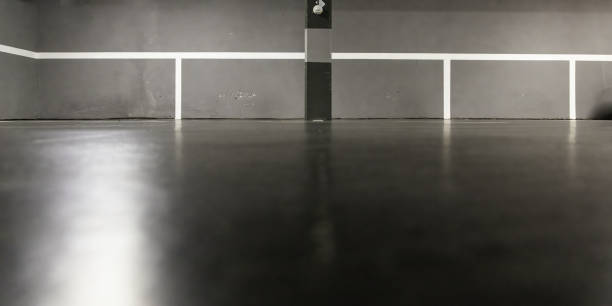
Advanced solution: super wear-resistant polyurethane
If you’re a hardcore DIYer who has access to heavy-duty car repair equipment (like a jack or tire changer), but still want the aesthetics and cleanability of epoxy flooring, you can choose a compromise:
A topcoat of** ultra-resistant polyurethane or polyaspartic** is applied to the carborundum base . This combination leverages the carborundum’s hardness to withstand heavy pressure, while the polyurethane’s flexibility and superior chemical resistance make it easily resistant to oil stains and scratches.
Summary and reflection: Make a long-term plan for your garage
Choosing a garage flooring material is essentially a strategic consideration of the long-term value of your property. Rather than being tempted by a low price, ask yourself: How will my garage be used in the next 20 years?
If you want minimal maintenance and maximum life , choose emery; if you prioritize aesthetics and don’t mind regular maintenance , epoxy coating can meet your needs.
Don’t let a few dollars’ difference in price ruin your future user experience.
So, which solution do you prefer? Have you ever regretted choosing the wrong flooring material? Share your garage flooring story in the comments!
